




I noticed the network before I noticed the catalog. With Podimo, the quality of the listening experience depends heavily on how smoothly the app can reach its shows and audiobooks when I want them. That makes it an interesting choice in the Music & Audio category: it is not simply about pressing play, but about how browsing, choosing, and continuing a listening session fit around real mobile conditions.
Developed by Podimo, this free app is aimed at people who want a broad place for spoken audio rather than a single-purpose podcast player. It is available for users aged 10 and over, and the current Android version is 2.144.1, with Android 8.0 or later required. The app has built a visible audience, with a 4.7 average from around 134 thousand ratings and more than 1 million installs. Those figures suggest a mature service that many listeners find easy enough to keep using, though they do not remove the practical questions about connectivity, subscriptions, and everyday reliability.
How Podimo feels when the connection is doing the work
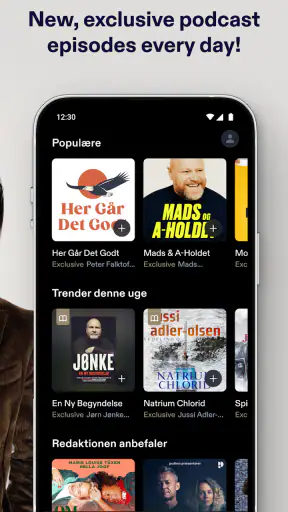
My first impression is that Podimo makes the discovery stage central. Instead of opening directly into a personal queue and ignoring everything else, I found myself moving between recommendations, categories, and the shows that had already caught my attention. That is useful when I want something new, especially because choosing spoken audio can take longer than choosing a song. A podcast episode may last a short commute or most of an evening, while an audiobook asks for a much longer commitment.
That discovery-first approach is also where a stable connection matters most. Images, descriptions, episode information, and playback choices all make more sense when they appear without hesitation. On a reliable home network, the process feels natural: I can browse, read enough context to decide, and begin listening without treating the app like a technical task. On a crowded mobile connection, however, the same routine can become less fluid. The problem is not necessarily playback alone; it is the small pauses before I can decide what to play.
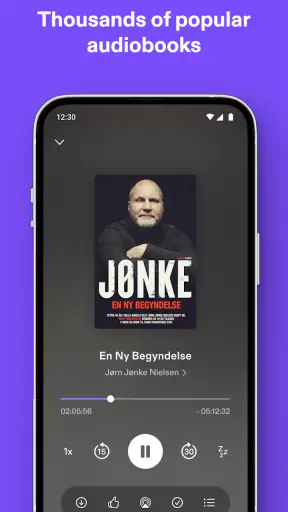
I would describe the service as a good fit for listeners who enjoy having both exclusive shows and audiobooks in one environment. That combination gives the app a different personality from a basic player that only organizes podcasts already available elsewhere. It can be especially appealing if you are tired of switching between a podcast app and a separate audiobook service. The trade-off is that a larger, more curated environment can make the choice feel less immediate than opening a familiar feed and pressing the newest episode.
The app is free to install, but in-app purchases range from $3.99 to $124.99 per item. That is an important part of the decision, because the free entry point should not be confused with unlimited access to every listening possibility. I would explore the catalog first and pay attention to what is available to me before building my entire listening routine around one particular series or audiobook. This avoids the disappointment of finding a title I like and only later discovering that access follows a different payment path.
Browsing works best when I have time to choose
Podimo is at its strongest when I am not in a hurry. On a quiet morning, I can look through spoken programs, compare the tone of different shows, and save ideas for later. That is a better experience than searching for something while already walking out the door. The app’s broad focus encourages exploration, but exploration naturally consumes more attention than a tightly managed playlist.
One useful habit is to separate discovery from listening. When I have a dependable connection, I use that moment to investigate unfamiliar shows and decide what deserves a place in my personal library. Later, when I am commuting or doing chores, I want to open the app with a clear choice already in mind. This simple workflow reduces the amount of browsing I need to do on mobile data and makes weak-signal moments less frustrating.
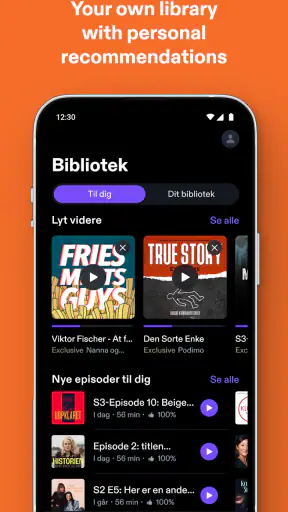
The personal library is valuable for the same reason. A library is not just a collection of titles; it is a way to turn a large catalog into a manageable shortlist. I would use it for programs I genuinely intend to return to, rather than saving everything that looks interesting. Too many saved possibilities can recreate the original problem, leaving me with a crowded shelf and no obvious next listen.
Everyday mobile situations reveal the real strengths
Imagine a normal weekday: I leave home with a podcast in mind, transfer to public transport, and later continue with an audiobook while preparing dinner. In that situation, Podimo is convenient when the first decision has already been made and the connection remains steady enough to start or continue playback. The app fits naturally into short gaps because spoken content does not require my eyes once it is playing.
The same scenario exposes its weakness if I wait until the platform to browse. A station, elevator, underground passage, or busy road can turn a simple search into a sequence of loading pauses. I would not rely on last-second discovery in those places. My practical advice is to make the choice before leaving a dependable network, then test the beginning of the episode or chapter while there is still time to change plans.
It also suits people who move between different kinds of listening. A podcast may be better for a short walk, while an audiobook can fill a longer stretch of repetitive work. Having both in one app reduces the need to remember which service contains what. Still, listeners who already have carefully organized podcast feeds may find the extra catalog unnecessary. If your priority is maximum control over independent feeds, a traditional podcast manager may feel more direct.
For families, the age rating of Everyone 10+ is a useful starting point, but I would still choose content personally rather than assuming every title suits every listener. Spoken-audio catalogs can cover very different themes and tones. The rating tells me the app is positioned for a broad audience, not that every program is appropriate for every child or household situation.
What happens when the network becomes unreliable
Connectivity problems are most noticeable at the handoff between activities. I may begin on Wi-Fi, leave the building, and expect the listening session to continue without thought. If the app needs to reach the service at that moment, the transition can become the point of failure. Even a brief interruption feels more serious when I am already moving and cannot comfortably stop to troubleshoot.
My recovery routine is deliberately simple. I first pause rather than repeatedly tapping play, because several commands in a row can make it unclear whether the app is responding or waiting. I then check whether other online apps are working, return to the chosen title, and restart from the same point if necessary. If the connection is clearly poor, I stop browsing and wait until I reach a more stable area. This is less elegant than uninterrupted listening, but it prevents a weak signal from turning into a longer session of frustration.
I would also avoid treating a failed start as proof that the title itself is unavailable. A slow connection can make discovery pages and playback feel equally uncertain. Trying another known title can help me distinguish a general network problem from an issue with one item. That small diagnostic step is more useful than immediately reinstalling the app or clearing everything.
The important limitation is that I cannot honestly recommend Podimo as a solution for every low-connectivity environment. If your routine regularly includes flights, remote trails, underground commutes, or workplaces with unreliable reception, you should verify that the listening access you need is practical for those conditions before committing to it. Connectivity is not a minor detail for this service; it shapes when browsing is comfortable and when recovery becomes necessary.
Using it without wasting mobile data
Podcasts and audiobooks are long-form media, so a careless mobile routine can use more data than a quick search or a short music sample. I would make Wi-Fi the default environment for catalog exploration, especially when I am comparing many episodes or moving through several audiobook pages. The more I browse before choosing, the less sensible it is to do that casually on a limited mobile plan.
A better mobile workflow is selective. I choose one program before leaving home, begin playback while the connection is strong, and avoid repeatedly opening unrelated pages during the same trip. I also keep my library focused, because a short list makes it easier to decide quickly instead of loading many possibilities. These habits do not change the app’s underlying network demands, but they reduce unnecessary activity around them.
There is another trade-off between convenience and certainty. Starting a title immediately is attractive, but taking a moment to confirm that the correct episode or audiobook is selected can prevent repeated loading and restarting. This matters particularly when I am using mobile data in a place where reception comes and goes. A small amount of planning is more effective than trying to repair a disrupted session after it has already begun.
I would not assume that every listening situation will behave like a strong home connection. Mobile networks vary inside buildings, on public transport, and in crowded areas. For that reason, I judge Podimo less by an ideal browsing session and more by whether it fits my personal pattern: where I listen, how often I change titles, and how much patience I have for interruptions. Someone with generous data and a predictable commute may barely notice the issue. Someone with a strict data allowance may need a much more cautious routine.
Who should choose it, and who should look elsewhere
I would recommend Podimo to a listener who wants podcasts and audiobooks together, enjoys finding unfamiliar spoken content, and usually has a reliable connection when making choices. It is also a sensible option for someone who prefers a curated destination over manually collecting every show from separate sources. The combination can simplify a daily routine when I want variety without maintaining several different apps.
I would be more hesitant for a person whose main requirement is dependable listening in places with little or no connectivity. I would also point podcast enthusiasts toward a dedicated alternative if they care most about detailed feed management, highly customized organization, or a workflow built around shows from many different sources. Podimo’s appeal is the integrated catalog and discovery experience, not necessarily the feeling of a minimalist utility.
Cost deserves equal attention. Because the app is free to download but includes purchases, I would not assume that installing it settles the financial question. I would inspect the access offered for the shows and audiobooks I actually want. A broad catalog is only useful if the particular content that matters to me fits the available purchase arrangement.
The developer, Podimo, has clearly positioned the product as more than a simple playback window. That ambition is helpful when I want one place for different forms of spoken entertainment, but it also means the app asks me to engage with its catalog. If I want to open a player, select a known feed, and leave immediately, a simpler tool may be less distracting.
My connectivity verdict after using the app
Podimo works best when I plan around the network instead of pretending the network does not matter. A stable connection makes discovery pleasant, helps the combined podcast-and-audiobook catalog feel coherent, and supports the quick transitions that define mobile listening. A weak connection changes the experience from effortless to procedural: choose earlier, browse less, and be ready to recover when a handoff fails.
The app’s strongest practical idea is the personal library. Used carefully, it turns a large selection into a short list that I can approach with less mobile browsing. My most useful tip is to build that list at home, then treat it as the starting point for commutes and chores. That workflow gives the service a much better chance of feeling reliable, even though it does not remove the need for connectivity.
My final view is positive but conditional. Podimo is a compelling free Music & Audio app for people who want exclusive shows and audiobooks gathered together, and its 4.7 average from a substantial listener base reflects a generally strong reception. I would recommend trying it if your normal listening happens around dependable Wi-Fi or mobile service and you value discovery. I would skip it, or compare it carefully with a more offline-focused or feed-focused alternative, if your priority is uninterrupted access in places where the connection cannot be trusted.
In short, Podimo is most enjoyable when connectivity supports the choice rather than interrupting it. With a little preparation, it can become a convenient spoken-audio companion. Without that preparation, the same catalog that makes it attractive can make weak-network moments feel unnecessarily complicated.


